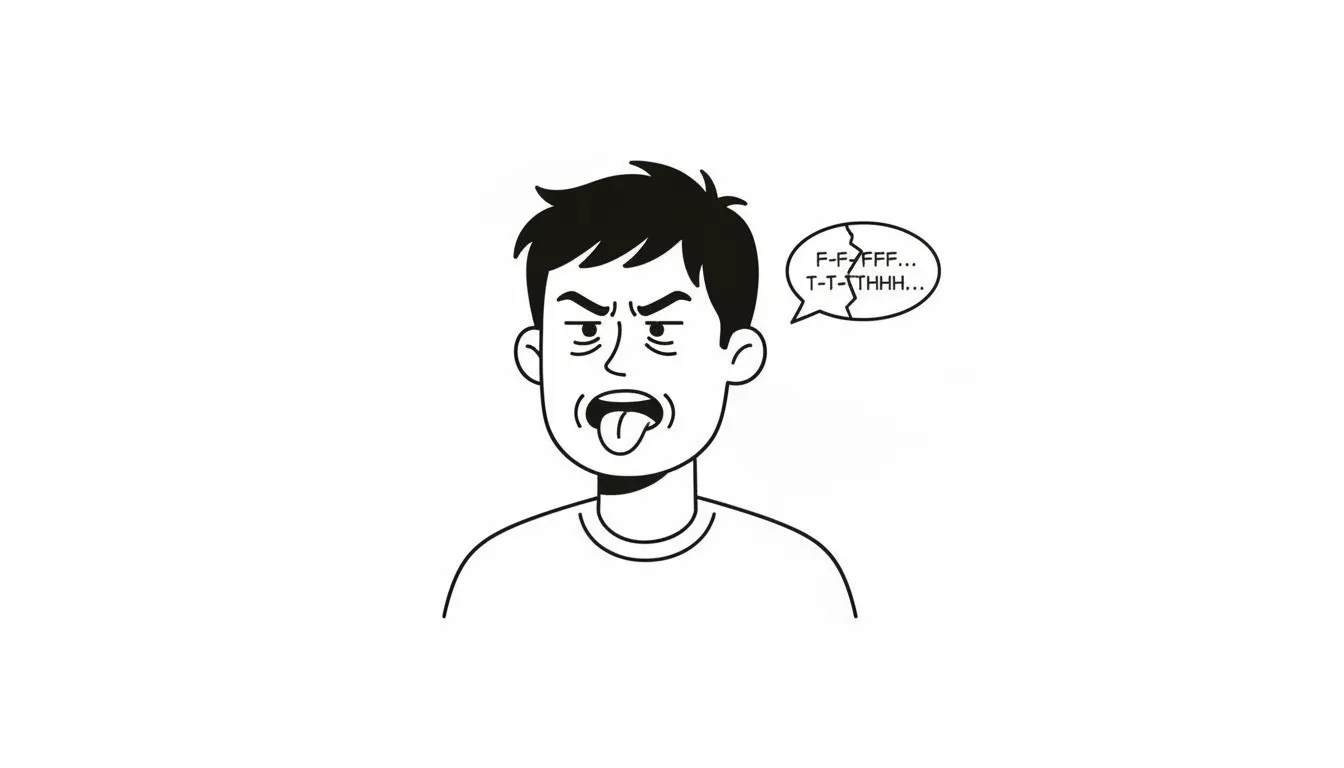
Nouns ending in TH: Complete Guide for Cambridge Use of English Part 3
Master nouns ending in -TH for Cambridge B2 First & C1 Advanced Use of English Part 3. Complete list with examples, pronunciation, spelling tips & practice exercises.

Table of contents
If you’ve ever written «strenght» instead of «strength» in a Cambridge exam, you’re not alone. Nouns ending in -TH are amongst the most frequently tested word transformations in Use of English Part 3, appearing in nearly every B2 First and C1 Advanced exam. Yet they’re also some of the most commonly misspelt words by students preparing for these exams.
In this guide, you’ll find a complete list of essential -TH nouns, example sentences showing how they’re used in context, pronunciation tips, spelling alerts for the tricky ones, and exam-style practice exercises. By the end of this post, you’ll know exactly how to recognise, spell, and use these transformations correctly when they appear in your exam.
Why nouns ending in -TH matter in Cambridge exams
Use of English Part 3 tests your ability to form words correctly by changing their word class—turning adjectives into nouns, verbs into nouns, and so on. This part is worth a significant portion of your overall score: there are 8 questions in Part 3, and each correct answer is worth 1 mark, contributing to the total of 28 marks available for Use of English.
In my experience as a Cambridge examiner and teacher, at least one or two -TH noun transformations appear in virtually every Use of English Part 3 task. Words like strength, length, width, and growth are exam favourites because they’re common in everyday English and test your understanding of spelling patterns.
The challenge? Many students confuse these -TH nouns with other noun suffixes like -ness or -ity. Others know the correct suffix but struggle with spelling changes (like long → length) or make common errors such as writing «strenght» with the letters in the wrong order.
💡 Exam tip: Mastering -TH nouns isn’t just useful for Use of English Part 3. Using these words accurately in your Writing tasks (essays, reports, reviews) demonstrates a wider range of vocabulary, which can boost your marks in that paper too.
Complete list of nouns ending in -TH
The nouns below are organised into two categories: those formed from adjectives and those formed from verbs. I’ve marked the most frequently tested words in Cambridge exams with an asterisk (*), and I’ve included example sentences to show you how each word is used in context. Pay special attention to the spelling alerts—these highlight the most common mistakes students make.
From adjectives to nouns ending in -TH
1. true → truth*
Example: The truth about climate change is undeniable.
Pronunciation: /truːθ/
2. strong → strength*
Example: Her strength helped her overcome many obstacles.
Pronunciation: /streŋθ/
⚠️ Spelling alert: NOT «strenght» – the ‘g’ comes before ‘th’!
3. long → length*
Example: The length of the film is over three hours.
Pronunciation: /leŋθ/
⚠️ Spelling alert: The vowel changes from ‘o’ to ‘e’
4. wide → width*
Example: The width of the river varies greatly.
Pronunciation: /wɪdθ/
⚠️ Spelling alert: Use -TH, not «wideness»
5. warm → warmth*
Example: We appreciated the warmth of their welcome.
Pronunciation: /wɔːmθ/
6. deep → depth
Example: The depth of the ocean here is remarkable.
Pronunciation: /depθ/
7. broad → breadth
Example: The breadth of his knowledge impressed everyone.
Pronunciation: /bredθ/
⚠️ Spelling alert: ‘ea’ spelling, not ‘oa’ like in «broad»
8. young → youth
Example: In my youth, I travelled extensively.
Pronunciation: /juːθ/
Note: Can be used as both singular and plural
9. healthy → health
Example: Good health is more valuable than wealth.
Pronunciation: /helθ/
Note: The adjective loses the ‘y’
10. wealthy → wealth
Example: His wealth came from property investment.
Pronunciation: /welθ/
Note: The adjective loses the ‘y’
From verbs to nouns ending in -TH
1. grow → growth*
Example: Economic growth slowed down last year.
Pronunciation: /ɡrəʊθ/
2. die → death
Example: The death of the author shocked fans worldwide.
Pronunciation: /deθ/
3. give birth → birth
Example: She gave birth to twins last month.
Pronunciation: /bɜːθ/
Note: The verb form is «give birth», not just «birth»
4. breathe → breath
Example: Take a deep breath before you start speaking.
Pronunciation: /breθ/
⚠️ Spelling alert: The noun is «breath» /breθ/, whilst the verb is «breathe» /briːð/
Pronunciation guide: how to say -TH
All nouns ending in -TH use what we call the «voiceless TH» sound, written as /θ/ in phonetic script. To produce this sound correctly, place the tip of your tongue between your upper and lower teeth and push air out. Your vocal cords should not vibrate—it’s a soft, breathy sound.
This is different from the «voiced TH» sound /ð/ that you hear in words like «brother», «the», or «mother». With the voiced TH, your vocal cords vibrate as you make the sound.
Quick tip: Think of the sound at the end of «both», «month», or «tooth»—that’s the same /θ/ sound you need for all these -TH nouns.
Spelling patterns and memory tips
The pattern: consonant + TH
Most -TH nouns follow a simple pattern: they end with a consonant followed by -TH. Examples include length, strength, width, warmth, depth, and growth. However, there are a few exceptions where the -TH is preceded by a vowel: truth, youth, death, and breath.
Watch out for these spelling traps
Here are the most common spelling mistakes students make with -TH nouns:
- ❌ strenght → ✅ strength (the ‘g’ comes before the ‘th’, not after)
- ❌ breadht → ✅ breadth (the vowel changes from ‘oa’ in «broad» to ‘ea’)
- ❌ wideness → ✅ width (use -TH, not -ness)
- ❌ longness → ✅ length (and remember the vowel changes from ‘o’ to ‘e’)
- ❌ strongness → ✅ strength («strongness» is not a real word in English!)
Memory tricks
If the adjective describes a physical dimension or measurement (like long, wide, strong, deep, broad), it almost always forms its noun with -TH rather than another suffix.
Similarly, abstract qualities related to human characteristics or emotions often use -TH too: true → truth, warm → warmth, young → youth.
For words like strength and length where the spelling can be confusing, try breaking them down into syllables in your mind: streng-th and leng-th. This can help you remember that the ‘g’ comes before the ‘th’.
How -TH nouns appear in Use of English Part 3
In Use of English Part 3, you’re given a text with eight gaps. Next to each gap is a word in capital letters (the «prompt word»), and you need to change that word into the correct form to complete the sentence. The key to success is recognising what type of word the gap needs—and that’s where context clues come in.
What to look for
There are several grammatical patterns that signal you need a noun:
- Article + gap: «The _____ of the building»
- Possessive + gap: «His _____ surprised everyone»
- Preposition + gap: «In _____, she made the right choice»
- Adjective + gap: «Great _____ is required for this task»
If you see an adjective like STRONG, LONG, WIDE, or TRUE in capital letters as the prompt word, and the sentence structure suggests a noun is needed, your first thought should be: «Does this need a -TH noun?»
Example from an exam-style task
Here are three examples that show how -TH noun transformations typically appear in the exam:
Example 1:
«The (LONG) _____ of the meeting exceeded two hours.»
→ Answer: length
Example 2:
«Nobody could question the (TRUE) _____ of his statement.»
→ Answer: truth
Example 3:
«Despite her (YOUNG) _____, she showed remarkable maturity.»
→ Answer: youth
💡 Exam strategy: When you identify that a noun is needed, check if the prompt word is an adjective describing a dimension, quality, or abstract concept. If it is, try adding -TH first before considering other noun suffixes. Remember to check for any spelling changes!
Common mistakes to avoid
Let’s look at the five most frequent errors students make with -TH nouns—and how to avoid them:
1. Using -ness instead of -TH
Many students default to adding -ness to any adjective, but this doesn’t work for words that require -TH.
- ❌ «The wideness of the road» → ✅ «The width of the road»
- ❌ «I admire his strongness» → ✅ «I admire his strength»
2. Misspelling «strength»
This is the number one spelling error in Cambridge exams. Students write «strenght», «strenth», or even «strenghth». Remember: streng-th. The ‘g’ comes before ‘th’.
3. Forgetting vowel changes
Some -TH nouns involve a vowel change from the original adjective:
- broad (oa) → breadth (ea)
- long (o) → length (e)
4. Confusing verb and noun forms
Some words have both verb and noun forms that look and sound similar but are spelt differently:
- Verb: «They breathe deeply» (with an ‘e’ at the end, pronounced /briːð/)
- Noun: «Take a deep breath» (no ‘e’ at the end, pronounced /breθ/)
5. Using the adjective when a noun is needed
This happens when students don’t recognise the grammatical structure of the sentence.
- ❌ «The strong of the material is impressive» → ✅ «The strength of the material is impressive»
Practice exercise: exam-style sentences
Now it’s your turn! Complete these exam-style sentences with the correct -TH noun. The answers are below—but try not to peek until you’ve attempted all ten questions!
How did you do? If you got 8-10 correct, excellent work! If you scored 5-7, you’re on the right track—just review the spelling patterns above. If you got fewer than 5 correct, don’t worry—go back through the complete list and practise writing each word several times.
Next steps: more word formation resources
Now that you’ve mastered nouns ending in -TH, you’re well on your way to conquering Use of English Part 3. But -TH nouns are just one type of word transformation you’ll encounter in the exam. To continue building your word formation skills, explore these related topics:
- Nouns ending in -ness, -ity, and -tion
- Adjectives ending in -ful, -less, -ive, and -able
- Negative prefixes: un-, in-, im-, ir-, and dis-
- Complete word formation strategies for Use of English Part 3
Remember, the more you practise these transformations in context, the more automatic they’ll become. Try to use these -TH nouns in your own writing whenever possible—not just for exam practice, but in everyday English. This will help cement them in your memory and make them feel natural when you need them under exam pressure.
Y hasta el próximo artículo, don’t forget to keep smiling!