B2 Connectors in English: Complete Guide for Writing and Speaking
Master B2 connectors in English with this comprehensive guide. Learn addition, contrast, cause-effect connectors and more for your B2 First Writing and Speaking. Includes examples, summary table, and practical tips.

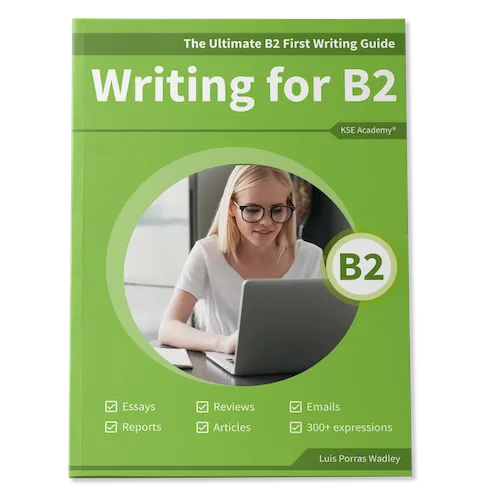
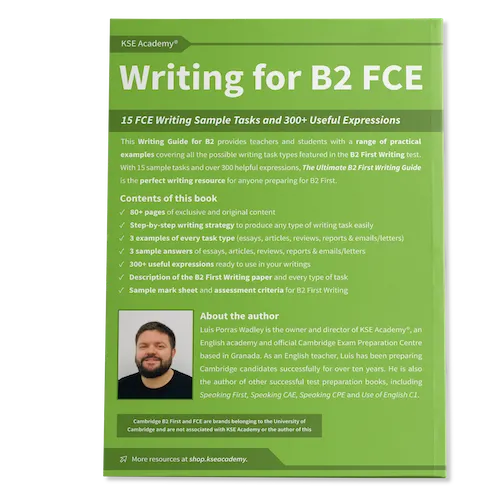
Table of contents
Mastering B2-level connectors in English is essential to achieve the fluency and coherence expected at this upper-intermediate level. Whether you’re preparing for the B2 First Writing or the B2 Speaking, knowing and being able to use connectors correctly can make the difference between passing with flying colours or falling just short. In this article, I’m going to explain all the essential B2 connectors, with translated examples, practical tips, and a summary table so you have all the material you need to succeed in your exam.
What are connectors in English and why are they fundamental at B2
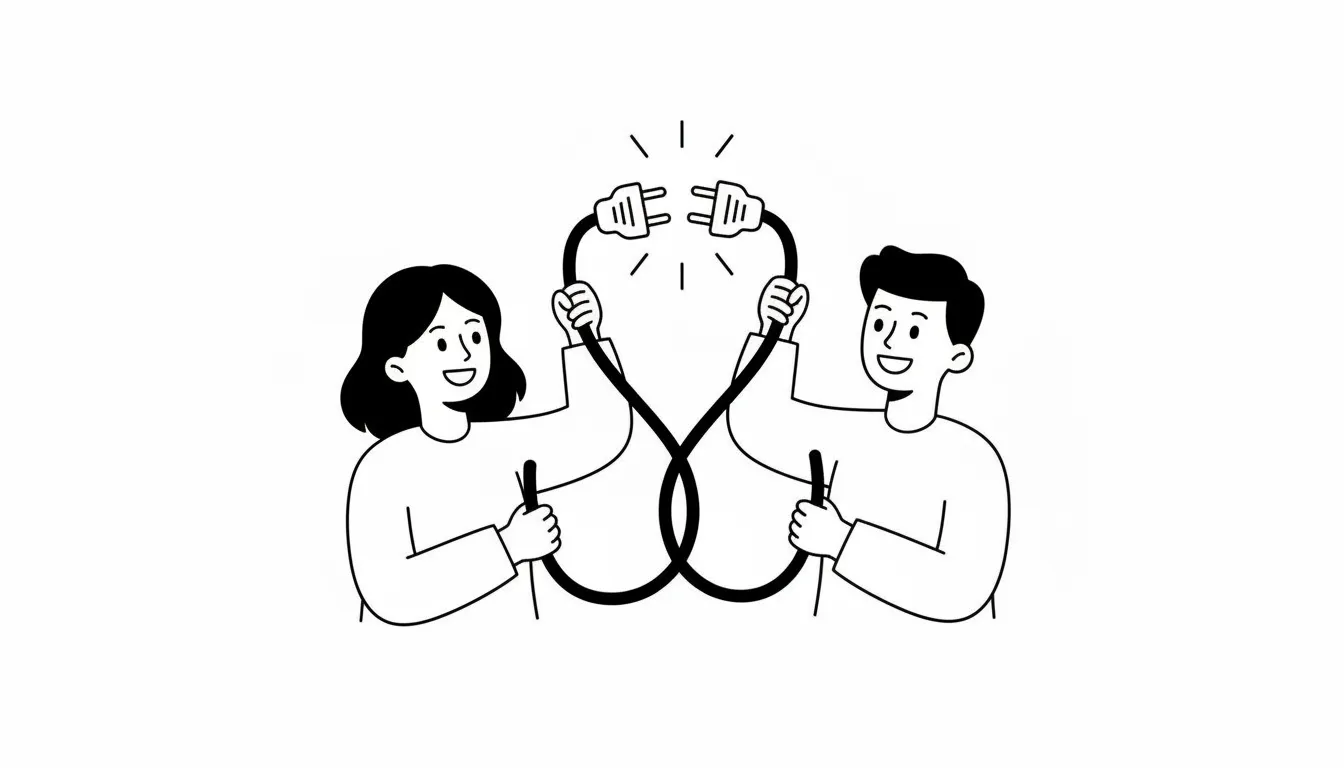
Connectors, also called linkers or linking words, are words or expressions that function as the glue in our sentences. Their main purpose is to link ideas, provide coherence and cohesion in both written texts and oral discourse. Without connectors, our sentences would sound disjointed, like a list of unrelated ideas.
At B2 level, the correct use of connectors is one of the key criteria that Cambridge examiners assess. It’s not enough to have good vocabulary or correct grammar: your ideas must flow naturally, and connectors are essential for that. If you already know some B1-level connectors, now is the time to take the next step and learn more sophisticated and formal connectors.
Differences between B1 and B2 connectors
If you’re coming from a B1 level, you’re probably already familiar with basic connectors such as but, because, so, then, before, or although. These connectors are perfect for communicating in a simple way, but at B2 you’re expected to use more advanced and varied connectors that demonstrate greater command of the language.
For example, instead of always using but to contrast ideas, at B2 you can use however, nevertheless, or on the other hand. Instead of repeating also, you can incorporate moreover, furthermore, or in addition. This variety will not only make your English sound more natural and sophisticated, but will also help you achieve better marks in official exams.
Addition connectors for B2
Addition connectors are used to add information, reinforce arguments, or list points. They’re especially useful when you want to develop an idea or present several arguments in a B2 Essay.
Moreover / Furthermore
These two connectors mean «además» or «es más» and are used to add relevant information to what you’ve already said. They’re quite formal, so they’re perfect for academic writing such as essays or reports. They’re normally placed at the beginning of a sentence, followed by a comma.
«Learning a foreign language improves cognitive abilities. Moreover, it opens up new job opportunities.»
(Aprender un idioma extranjero mejora las habilidades cognitivas. Además, abre nuevas oportunidades laborales.)«Public transport is more eco-friendly. Furthermore, it reduces traffic congestion in cities.»
(El transporte público es más ecológico. Es más, reduce la congestión del tráfico en las ciudades.)
In addition / Additionally
Both mean «además» or «adicionalmente» and are perfect for adding an extra point to your argument. They’re used at the beginning of a sentence and are followed by a comma.
«The course includes practical workshops. In addition, students have access to online resources.»
(El curso incluye talleres prácticos. Además, los estudiantes tienen acceso a recursos en línea.)«She speaks three languages fluently. Additionally, she is learning Japanese.»
(Habla tres idiomas con fluidez. Adicionalmente, está aprendiendo japonés.)
As well as / As well
As well as means «así como» and is used to link two elements, usually nouns. As well, on the other hand, means «también» and always goes at the end of the sentence.
«The course covers grammar as well as pronunciation.»
(El curso cubre la gramática así como la pronunciación.)«She enjoys reading. She likes painting, as well.»
(Le gusta leer. Le gusta pintar, también.)
Not only… but also
This structure means «no solo… sino también» and is used to emphasise that there are two important elements, with the second being equal to or more relevant than the first.
«She is not only intelligent but also hardworking.»
(No solo es inteligente, sino también trabajadora.)«The programme not only teaches English but also prepares students for exams.»
(El programa no solo enseña inglés, sino que también prepara a los estudiantes para los exámenes.)
Besides / What’s more
Besides means «además de eso» and what’s more means «es más». Both add additional information, with what’s more being slightly more emphatic.
«I don’t want to go out tonight. Besides, it’s raining.»
(No quiero salir esta noche. Además de eso, está lloviendo.)«The hotel was clean and comfortable. What’s more, the staff were very friendly.»
(El hotel era limpio y cómodo. Es más, el personal era muy amable.)
Contrast connectors for B2
Contrast connectors are used to present opposing ideas or to show differences between two situations. They’re fundamental in debates, discussions, and in the argumentative part of your writing.
However / Nevertheless
Both mean «sin embargo» or «no obstante» and are used to contrast two ideas. They normally go at the beginning of a new sentence, preceded by a full stop and followed by a comma.
«The film received excellent reviews. However, it didn’t perform well at the box office.»
(La película recibió críticas excelentes. Sin embargo, no funcionó bien en taquilla.)«The journey was long and tiring. Nevertheless, it was worth it.»
(El viaje fue largo y agotador. No obstante, mereció la pena.)
Although / Though / Even though
These three connectors mean «aunque», but with different levels of emphasis. Although is the most formal and can go at the beginning or in the middle of a sentence. Though is more informal and can also go at the end. Even though adds more emphasis and surprise.
«Although I was tired, I went to the gym.»
(Aunque estaba cansado, fui al gimnasio.)«I didn’t like the book. It was interesting, though.»
(No me gustó el libro. Sin embargo, era interesante.)
«Even though it was raining heavily, the match continued.»
(Aunque llovía con fuerza, el partido continuó.)«She passed the exam although she hadn’t studied much.»
(Aprobó el examen aunque no había estudiado mucho.)
While / Whereas
Both mean «mientras que» and are used to show contrast between two ideas. They always go between two sentences.
«I prefer working in the morning, while my colleague prefers afternoons.»
(Prefiero trabajar por la mañana, mientras que mi colega prefiere las tardes.)«Some people enjoy city life, whereas others prefer the countryside.»
(A algunas personas les gusta la vida en la ciudad, mientras que otras prefieren el campo.)
In spite of / Despite
These connectors mean «a pesar de» and are perfect for showing that something happened even though there was an obstacle. They’re followed by a noun or a verb in the -ing form, never by a complete sentence. They can also be used with the expression the fact that followed by subject + verb.
«Despite the rain, we enjoyed the picnic.»
(A pesar de la lluvia, disfrutamos del picnic.)«In spite of feeling ill, she went to work.»
(A pesar de sentirse mal, fue a trabajar.)
«Despite the fact that he studied hard, he didn’t pass.»
(A pesar de que estudió mucho, no aprobó.)«We had a great time in spite of the fact that the weather was awful.»
(Lo pasamos genial a pesar de que el tiempo era horrible.)
On the other hand / On the contrary
On the other hand means «por otro lado» and is used to present an alternative point of view. On the contrary means «al contrario» and is used to completely contradict what has been said before.
«Living in the city is convenient. On the other hand, it can be very noisy.»
(Vivir en la ciudad es conveniente. Por otro lado, puede ser muy ruidoso.)«I don’t think the film was boring. On the contrary, I found it fascinating.»
(No creo que la película fuera aburrida. Al contrario, me pareció fascinante.)
Cause and effect connectors for B2
These connectors help you explain why something happens (cause) or what consequences an action has (effect). They’re essential for arguing and justifying your opinions.
Because / As / Since
All three mean «porque», «ya que», or «como» and are used to introduce the reason for something. Because is the most common, whilst as and since are more formal.
«I didn’t go out because I was feeling unwell.»
(No salí porque me sentía mal.)«As it was late, we decided to take a taxi.»
(Como era tarde, decidimos coger un taxi.)
«Since you’re already here, why don’t you stay for dinner?»
(Ya que ya estás aquí, ¿por qué no te quedas a cenar?)«The event was cancelled because of the bad weather.»
(El evento fue cancelado debido al mal tiempo.)
Due to / Owing to / Because of
These three connectors mean «debido a» or «a causa de» and are followed by a noun, not by a complete sentence.
«The flight was delayed due to technical problems.»
(El vuelo se retrasó debido a problemas técnicos.)«The match was postponed owing to heavy rain.»
(El partido se aplazó a causa de la fuerte lluvia.)
«Many shops closed because of the pandemic.»
(Muchas tiendas cerraron debido a la pandemia.)«Due to his experience, he got the job.»
(Debido a su experiencia, consiguió el trabajo.)
Therefore / Thus / Hence
These connectors mean «por lo tanto» or «por consiguiente» and are used to show the result or consequence of something. They’re quite formal and are placed at the beginning of a sentence.
«The company made huge losses. Therefore, they had to close several branches.»
(La empresa tuvo grandes pérdidas. Por lo tanto, tuvieron que cerrar varias sucursales.)«He didn’t study for the exam. Thus, he failed.»
(No estudió para el examen. Así pues, suspendió.)
«The weather forecast predicts rain. Hence, we should take umbrellas.»
(El pronóstico del tiempo predice lluvia. Por consiguiente, deberíamos llevar paraguas.)«Prices have increased significantly. Therefore, fewer people can afford it.»
(Los precios han aumentado significativamente. Por lo tanto, menos gente puede permitírselo.)
As a result / Consequently
Both mean «como resultado» or «en consecuencia» and are used to show the effect of a previous action.
«She trained every day. As a result, she won the competition.»
(Entrenó todos los días. Como resultado, ganó la competición.)«Traffic was heavy. Consequently, we arrived late.»
(Había mucho tráfico. En consecuencia, llegamos tarde.)
So / That’s why
So means «así que» and is more informal. That’s why means «por eso» and is used to explain the reason for something mentioned previously.
«I was exhausted, so I went to bed early.»
(Estaba agotado, así que me fui a la cama temprano.)«It was raining. That’s why I stayed at home.»
(Estaba lloviendo. Por eso me quedé en casa.)
Purpose connectors for B2
These connectors help you explain why you do something or what the aim of an action is.
In order to / So as to
Both mean «para» or «con el fin de» and are more formal than simply using to. They’re followed by an infinitive.
«I’m studying hard in order to pass my exams.»
(Estoy estudiando mucho para aprobar mis exámenes.)«She left early so as to avoid the traffic.»
(Salió temprano para evitar el tráfico.)
So that
This connector means «para que» or «de manera que» and is followed by a complete sentence (subject + verb). It’s often used with modals such as can, could, will, or would.
«I’ll send you the document so that you can review it.»
(Te enviaré el documento para que puedas revisarlo.)«She spoke slowly so that everyone could understand.»
(Habló despacio para que todos pudieran entender.)
With the aim of / With a view to
These expressions mean «con el objetivo de» and are very formal. They’re followed by a verb in the -ing form.
«The company launched a new campaign with the aim of attracting younger customers.»
(La empresa lanzó una nueva campaña con el objetivo de atraer a clientes más jóvenes.)«We’re investing in technology with a view to improving efficiency.»
(Estamos invirtiendo en tecnología con vistas a mejorar la eficiencia.)
Connectors for giving examples at B2
When you need to give examples to support your arguments, these connectors are essential.
For example / For instance
Both mean «por ejemplo» and can be used interchangeably. They normally go at the beginning of a sentence or after a comma.
«There are many ways to learn English. For example, you can watch films in English.»
(Hay muchas formas de aprender inglés. Por ejemplo, puedes ver películas en inglés.)«Some cities are very expensive. London, for instance, has very high living costs.»
(Algunas ciudades son muy caras. Londres, por ejemplo, tiene un coste de vida muy alto.)
Such as
This connector means «como» or «tal como» and is used to give specific examples within a sentence.
«I enjoy outdoor activities such as hiking and cycling.»
(Disfruto de actividades al aire libre como el senderismo y el ciclismo.)«Many countries, such as Spain and Italy, have a Mediterranean climate.»
(Muchos países, como España e Italia, tienen un clima mediterráneo.)
In particular / Particularly
These connectors mean «en particular» or «particularmente» and are used to highlight a specific example that’s especially relevant.
«I love Italian food, in particular pasta dishes.»
(Me encanta la comida italiana, en particular los platos de pasta.)«The museum has many impressive exhibits, particularly the ancient sculptures.»
(El museo tiene muchas exposiciones impresionantes, particularmente las esculturas antiguas.)
To illustrate
This expression means «para ilustrar» and is very formal. It’s used to introduce an example that clearly demonstrates your point.
«Technology has transformed education. To illustrate, students can now attend classes online.»
(La tecnología ha transformado la educación. Para ilustrar, los estudiantes ahora pueden asistir a clases en línea.)«Climate change affects everyone. To illustrate this point, consider the recent floods.»
(El cambio climático afecta a todos. Para ilustrar este punto, considera las recientes inundaciones.)
Sequence and order connectors for B2
These connectors help you organise your ideas logically and sequentially. They’re especially useful in narratives, processes, and when giving instructions.
Firstly / Secondly / Finally
These connectors mean «en primer lugar», «en segundo lugar», and «finalmente». They’re perfect for structuring arguments or listing points.
«Firstly, we need to identify the problem. Secondly, we should find solutions. Finally, we must implement them.»
(En primer lugar, debemos identificar el problema. En segundo lugar, deberíamos encontrar soluciones. Finalmente, debemos implementarlas.)«There are three reasons why I love this city. Firstly, the people are friendly…»
(Hay tres razones por las que amo esta ciudad. En primer lugar, la gente es amable…)
To begin with / To start with
Both mean «para empezar» and are used to introduce the first point in a series of arguments.
«To begin with, the hotel was far from the city centre.»
(Para empezar, el hotel estaba lejos del centro de la ciudad.)«To start with, let me explain the basic rules.»
(Para empezar, déjame explicar las reglas básicas.)
Subsequently / Afterwards
Subsequently means «posteriormente» or «a continuación» and is quite formal. Afterwards means «después» and is more common.
«The company faced financial difficulties. Subsequently, they decided to restructure.»
(La empresa enfrentó dificultades financieras. Posteriormente, decidieron reestructurarse.)«We had dinner and afterwards we went for a walk.»
(Cenamos y después dimos un paseo.)
Meanwhile / In the meantime
Both mean «mientras tanto» and are used to indicate that something happens at the same time as something else.
«I’ll prepare dinner. Meanwhile, you can set the table.»
(Prepararé la cena. Mientras tanto, puedes poner la mesa.)«The repairs will take two hours. In the meantime, you can wait here.»
(Las reparaciones tardarán dos horas. Mientras tanto, puedes esperar aquí.)
Emphasis connectors for B2
These connectors allow you to highlight or emphasise important information in your discourse or text.
Above all / In particular
Above all means «sobre todo» and in particular means «en particular». They’re used to highlight the most important point.
«The course was excellent. Above all, the teacher was inspiring.»
(El curso fue excelente. Sobre todo, el profesor fue inspirador.)«I enjoy all sports, in particular tennis.»
(Disfruto de todos los deportes, en particular el tenis.)
Especially / Notably
Especially means «especialmente» and notably means «notablemente». Both emphasise something that deserves special attention.
«I love travelling, especially to exotic destinations.»
(Me encanta viajar, especialmente a destinos exóticos.)«Several countries, notably Japan and South Korea, have advanced technology.»
(Varios países, notablemente Japón y Corea del Sur, tienen tecnología avanzada.)
Indeed / Undoubtedly
Indeed means «en efecto» or «de hecho» and undoubtedly means «indudablemente». They’re formal connectors that reinforce a statement.
«The situation is serious. Indeed, it requires immediate action.»
(La situación es seria. En efecto, requiere acción inmediata.)«She is undoubtedly the best candidate for the job.»
(Ella es indudablemente la mejor candidata para el puesto.)
Significantly
This connector means «significativamente» and is used to emphasise that something is important or has a considerable impact.
«The new policy has significantly improved working conditions.»
(La nueva política ha mejorado significativamente las condiciones laborales.)«Prices have increased significantly over the past year.»
(Los precios han aumentado significativamente durante el último año.)
Conclusion and summary connectors for B2
These connectors are essential for closing your arguments and summarising your ideas, especially in the conclusion of an essay or report.
In conclusion / To conclude
Both mean «en conclusión» or «para concluir» and are used to introduce the final part of your text.
«In conclusion, technology has both advantages and disadvantages.»
(En conclusión, la tecnología tiene ventajas y desventajas.)«To conclude, I believe that education is the key to success.»
(Para concluir, creo que la educación es la clave del éxito.)
To sum up / In summary
These connectors mean «en resumen» or «para resumir» and are used to recap the main points.
«To sum up, there are three main reasons why this approach works.»
(Para resumir, hay tres razones principales por las que este enfoque funciona.)«In summary, the project was a success despite initial difficulties.»
(En resumen, el proyecto fue un éxito a pesar de las dificultades iniciales.)
All in all / Overall
Both mean «en general» or «en conjunto» and are used to give an overall assessment at the end of your text.
«All in all, it was a positive experience.»
(En general, fue una experiencia positiva.)«Overall, the benefits outweigh the disadvantages.»
(En conjunto, los beneficios superan las desventajas.)
In brief
This connector means «en pocas palabras» and is used to make a very concise summary.
«In brief, we need more time and resources.»
(En pocas palabras, necesitamos más tiempo y recursos.)«In brief, the plan has been approved.»
(En pocas palabras, el plan ha sido aprobado.)
How to use connectors in B2 Writing
In B2 First Writing, connectors are a fundamental tool for demonstrating coherence and cohesion. However, not all connectors are appropriate for all types of text. Depending on whether you’re writing an essay, an article, a review, a report, or an email, you’ll need to adjust your register and select the most appropriate connectors.
Formal vs. informal connectors: when to use each one
Formal connectors such as moreover, furthermore, nevertheless, or consequently are perfect for academic texts such as essays and reports. Informal connectors such as so, anyway, by the way, or well are more suitable for articles, reviews, and informal emails.
For example, if you’re writing an essay about the advantages and disadvantages of technology, you should use connectors such as:
- On the one hand… on the other hand…
- Moreover / Furthermore
- However / Nevertheless
- In conclusion
On the other hand, if you’re writing an article for a magazine about your favourite holiday, you could use more relaxed connectors such as:
- To be honest…
- What’s more…
- On top of that…
- All in all…
Connectors for Essays
The essay is the most formal type of writing in B2 First. Here you should use connectors that clearly structure your arguments and show a logical progression of ideas.
Recommended connectors for essays:
- To introduce: Firstly, To begin with, It is widely believed that…
- To add: Moreover, Furthermore, In addition…
- To contrast: However, On the other hand, Nevertheless, Whereas…
- To conclude: In conclusion, To sum up, All in all…
Connectors for Articles
Articles allow for a more personal and creative tone. You can use more colloquial connectors and expressions that engage the reader.
Recommended connectors for articles:
- To be honest, Actually, Believe it or not…
- What’s more, On top of that, Besides…
- On the other hand, However…
- All in all, Overall…
Connectors for Reviews
In a review, you need to give your opinion about a book, film, restaurant, etc. Connectors help you organise your positive and negative assessments.
Recommended connectors for reviews:
- To give opinions: In my opinion, Personally, I think…
- To give examples: For example, For instance, Such as…
- To contrast: However, On the other hand, Although…
- To recommend: Overall, All in all, I would definitely recommend…
Connectors for Emails/Letters
In an email, the register depends entirely on the recipient. If it’s formal (a complaint, request for information), use formal connectors. If it’s informal (a letter to a friend), you can be more relaxed.
Formal connectors for emails:
- I am writing to…, With regard to…, Furthermore…, Therefore…, I look forward to…
Informal connectors for emails:
- By the way, Anyway, Also, So, Well…
Connectors for Reports
A report is very formal and must be objective. Connectors help to present data, results, and recommendations clearly.
Recommended connectors for reports:
- To order: Firstly, Secondly, Finally…
- To add data: Moreover, In addition, Furthermore…
- For results: As a result, Consequently, Therefore…
- To recommend: It is recommended that…, It would be advisable to…
Before & After example: improve your Writing with connectors
Let’s see how connectors transform a basic text into a B2-level one:
❌ BEFORE (without appropriate connectors):
«Technology is important in education. Students can learn online. Teachers can use digital tools. Some people think technology is bad for concentration. I think technology is useful. Schools should use it more.»
✅ AFTER (with B2 connectors):
«Technology plays a crucial role in modern education. Firstly, students can learn online, which offers flexibility. Moreover, teachers can use digital tools to make lessons more engaging. However, some people argue that technology negatively affects concentration. Nevertheless, I believe that the benefits outweigh the drawbacks. Therefore, schools should integrate technology more widely.»
As you can see, the second text flows much better, the ideas are clearly connected, and the level of English is notably higher.
How to use connectors in B2 Speaking
In B2 First Speaking, connectors are just as important as in writing, but you must choose connectors that sound natural in a conversation. Don’t use overly formal connectors such as moreover or furthermore when speaking, as you’ll sound unnatural.
Connectors for buying time whilst thinking
When speaking in English, you sometimes need a few seconds to organise your ideas. These connectors help you buy time without it seeming like you don’t know what to say:
- Well…, Let me think…, Actually…, You know…, I mean…, To be honest…
For example:
«What do you think about online learning?»
«Well, to be honest, I think it has both advantages and disadvantages. Let me think… I mean, it’s convenient, but you know, some people find it hard to concentrate.»
Connectors for structuring your oral discourse
When you have to speak for a minute (as in Speaking Part 2), connectors help you organise your discourse clearly:
- To start: First of all, To start with…
- To add: Also, As well as that, Besides, What’s more…
- To contrast: However, On the other hand, Although…
- To conclude: So, overall, All in all…
Natural connectors in conversation
In an informal conversation (as in Speaking Part 4), use connectors that sound spontaneous:
- So, Actually, I think, In my opinion, Personally, That’s why, Because of that…
Before & After example: improve your Speaking with connectors
Let’s see how connectors improve an oral response:
❌ BEFORE (without connectors):
«I like travelling. I enjoy meeting new people. I learn about different cultures. Travelling is expensive. I don’t travel very often.»
✅ AFTER (with natural connectors):
«Well, I really enjoy travelling. First of all, I love meeting new people from different backgrounds. What’s more, I learn so much about different cultures. However, travelling can be quite expensive, so I don’t get to do it as often as I’d like. But overall, I think it’s one of the most rewarding experiences.»
The second response sounds much more fluent, structured, and natural, exactly what examiners are looking for at B2.
Common mistakes when using connectors at B2 (and how to avoid them)
Even students with a good level make mistakes when using connectors. Here are the most common ones and how to avoid them.
Using too many connectors
Mistake: Putting a connector in every sentence makes the text sound forced and artificial.
Incorrect example:
«Firstly, I love reading. Moreover, I enjoy writing. Furthermore, I like poetry. In addition, I write short stories.»
Solution: Use between 6-8 varied connectors in a 140-190 word composition. Let some sentences flow naturally without needing connectors.
Mixing formal and informal registers
Mistake: Using informal connectors in formal texts or vice versa.
Incorrect example in an essay:
«Technology is important. Anyway, it helps students learn better.»
Solution: In essays and reports, use formal connectors (moreover, however, therefore). In articles and informal emails, you can be more relaxed (anyway, by the way, so).
Literal translation from Spanish
Mistake: Some students translate connectors directly from Spanish, which produces errors.
Incorrect examples:
- ❌ «In other hand» (correct: on the other hand)
- ❌ «Despite of» (correct: despite or in spite of)
- ❌ «In the other side» (correct: on the other hand)
Solution: Learn connectors in context, not in isolation. Read examples and practise using them correctly.
Incorrect position in the sentence
Mistake: Placing the connector in the wrong part of the sentence.
Incorrect example:
«I like reading however I don’t have much time.»
Correct:
«I like reading. However, I don’t have much time.»
Or:
«I like reading; however, I don’t have much time.»
Solution: Connectors such as however, therefore, moreover normally go at the beginning of a new sentence, preceded by a full stop and followed by a comma.
Confusing connectors with similar meanings
Mistake: Using although and despite interchangeably without considering their structure.
Incorrect example:
«Despite it was raining, we went out.»
Correct:
«Although it was raining, we went out.» (followed by complete sentence)
«Despite the rain, we went out.» (followed by noun)
Solution: Learn the structure that follows each connector. Although/though/even though are followed by subject + verb. Despite/in spite of are followed by a noun or verb in -ing form.
Summary table: essential connectors for B2 by function
Here’s a complete HTML table with all B2 connectors organised by function, with their meaning in Spanish and register. You can consult it whenever you’re writing or preparing your speaking.
Practical exercises with B2 connectors
In this section, you’ll find interactive exercises to practise all the connectors we’ve seen in this article. You’ll be able to check your answers and receive immediate feedback.
Additional resources for practising B2 connectors
If you want to continue improving your use of connectors in English, I recommend these resources:
- Read articles in English: Newspapers such as The Guardian, BBC News, or magazines such as National Geographic use B2-C1 level connectors naturally.
- Practise with real exam examples: Check out the B2 First Writing examples to see how connectors are used in context.
- Listen to podcasts in English: Pay attention to how native speakers use connectors to structure their ideas.
- Write regularly: The best way to master connectors is to use them. Try writing a short text every day using different connectors.
Frequently asked questions about B2 connectors
How many connectors should I use in a B2 writing?
There’s no exact number, but I recommend using between 6 and 8 varied connectors in a 140-190 word composition. The important thing is that they sound natural and not forced. Use connectors from different categories (addition, contrast, cause-effect, conclusion) to demonstrate variety.
Can I use the same connectors in writing and speaking?
Generally yes, but you should adapt the tone. In writing, you can use more formal connectors such as moreover, furthermore, or consequently. In speaking, it’s better to use connectors that sound more natural in conversation such as well, so, actually, on the other hand, or you know.
What’s the difference between «however» and «although»?
Both express contrast, but have different structures. However is normally placed at the beginning of a new sentence, preceded by a full stop and followed by a comma. Although introduces a subordinate clause and can go at the beginning or in the middle of a sentence.
- «I was tired. However, I went to the gym.»
- «Although I was tired, I went to the gym.»
When do I use «in spite of» and when «although»?
The difference lies in what follows. Although is followed by a complete sentence (subject + verb). In spite of (or despite) is followed by a noun or a verb in the -ing form.
- «Although it was raining, we went out.» (complete sentence)
- «In spite of the rain, we went out.» (noun)
- «Despite feeling tired, I continued working.» (verb in -ing)
How can I memorise connectors effectively?
The best way to learn connectors isn’t to memorise them in isolation, but to use them in context. I recommend:
- Creating your own sentences with each connector
- Reading texts in English and underlining the connectors you find
- Practising by writing paragraphs using varied connectors
- Making flashcards with examples, not just translations
- Reviewing previous writings and replacing basic connectors with more advanced ones
Take your Writing and Speaking to the next level
If you want to delve even deeper into the techniques and strategies for the B2 First exam, I recommend having a look at my specialised books:
📘 Writing for B2: The ultimate guide to mastering all B2 First writing tasks, with examples, useful expressions, and step-by-step strategies for essays, articles, reviews, reports, and emails.
🎤 Speaking for B2: 10 complete practice tests for B2 First Speaking, with tips, useful phrases, and everything you need to feel confident on exam day.
Both books are designed for students and teachers alike, and will help you achieve the mark you need.
So, which connector do you find most difficult to use? Leave me a comment below and tell me which connectors you find most challenging or which ones you’d like me to explain in more detail. I’m here to help! 😊
Don’t forget to share this article with your study mates if you’ve found it useful. And if you want more content like this, follow us on our social media and subscribe to the KSE Academy blog.
Until the next article, don’t forget to keep smiling! 🚀