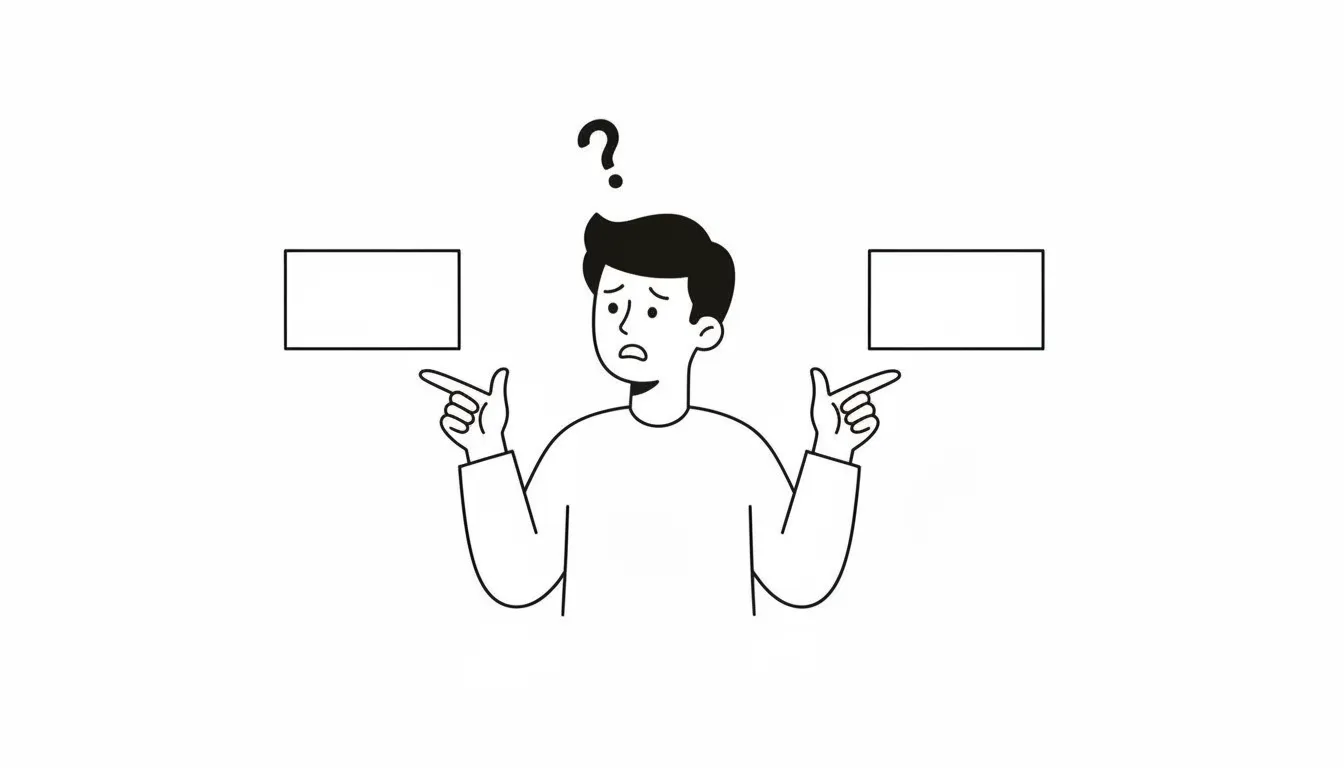
How to use THE FORMER and THE LATTER
Learn how to use «the former» and «the latter» correctly in English. A complete guide with examples and tips to use them in Writing tasks.

Table of contents
If you have ever come across the expressions the former and the latter in an English text, you have probably wondered exactly what they mean and how they are used. Don’t worry, because although they might seem complicated, they are actually quite simple once you understand their logic.
These two expressions are especially useful in formal and academic written English, and mastering them will help you sound more natural and sophisticated in your writing, particularly if you are preparing for Cambridge exams. Let’s see how to use them correctly.
What do the former and the latter mean?
Both the former and the latter are expressions that function as noun phrases and are used to refer to elements that have already been mentioned previously in a sentence. The key is knowing which is which.
The former: the first of two
The former /ˈfɔːmə/ is used to refer to the first of two elements that we have mentioned. It comes from the Old English «forma», which means «first» or «earlier in time».
🇬🇧 My hobbies are singing and dancing, but the former is my true passion.
Meaning: My hobbies are singing and dancing, but the first one is my true passion.
In this example, the former refers to «singing», as it is the first activity mentioned.
The latter: the second of two
The latter /ˈlætə/ is used to refer to the second (or last) of two elements mentioned. It comes from the Old English «lætra», which means «later» or «subsequent».
🇬🇧 My hobbies are singing and dancing, but the latter is my true passion.
Meaning: My hobbies are singing and dancing, but the second one is my true passion.
Here, the latter refers to «dancing», the second hobby mentioned.
A trick to remember the difference
There is a very simple trick to never forget which is which:
- Former = First
- Latter = Last
Notice that both words start with the same letter. It’s that easy!
When to use the former and the latter
Now that you know what each expression means, let’s look at when and how to use them correctly in your texts.
Only with two elements (never more)
This is the most important rule you must remember: the former and the latter are only used when you mention two elements. Although some writers sometimes use them with longer lists, most style guides and experts advise against this practice, as it can confuse the reader.
Incorrect:
🇬🇧 ❌ I have three favourite flavours: vanilla, chocolate, and strawberry. The former is my favourite.
Correct:
🇬🇧 ✅ I have three favourite flavours: vanilla, chocolate, and strawberry. The first is my favourite.
Meaning: I have three favourite flavours: vanilla, chocolate, and strawberry. The first one is my favourite.
If you mention more than two elements, use words like «the first», «the second», «the third», or «the last» for greater clarity.
Examples of correct usage
Let’s look at some additional examples to make it crystal clear:
🇬🇧 The host gave us a choice between burgers and hot dogs. I chose the former.
Meaning: The host gave us a choice between burgers and hot dogs. I chose the burgers.
🇬🇧 If I had to choose between vanilla or chocolate ice cream, I’d go with the latter.
Meaning: If I had to choose between vanilla or chocolate ice cream, I’d go with the chocolate one.
🇬🇧 We could either wait at the airport or get a rental car. I prefer the latter option.
Meaning: We could either wait at the airport or get a rental car. I prefer the second option.
Notice that both expressions can be used together in the same sentence or separately, depending on the context.
Common mistakes to avoid
One of the most frequent mistakes is forgetting the article «the». Never simply say «former» or «latter»; they must always be preceded by «the»:
- ❌ I chose former
- ✅ I chose the former
Another common mistake is using them with more than two elements, as we have already seen. And finally, many students confuse them with similar expressions like «late», «later», or «lately», which have completely different meanings.
The former and the latter in sentences: practical examples
Let’s look at more varied examples so you can observe how these expressions work in different contexts:
🇬🇧 Sarah has two cats named Timmy and Jimmy; the former is orange, while the latter is black.
Meaning: Sarah has two cats named Timmy and Jimmy; the first one is orange, while the second one is black.
🇬🇧 Ruby is deciding between job offers at either the hospital or the dentist’s office. The former has a higher salary, but the latter has more flexible hours.
Meaning: Ruby is deciding between job offers at the hospital or the dentist’s office. The first one has a higher salary, but the second one has more flexible hours.
🇬🇧 I interviewed two candidates; the former was inexperienced, but the latter worked for a similar company for many years.
Meaning: I interviewed two candidates; the first one was inexperienced, but the second one worked for a similar company for many years.
🇬🇧 Vicky and Mary went to the beach; the former swam all day while the latter just sunbathed.
Meaning: Vicky and Mary went to the beach; the first one swam all day while the second one just sunbathed.
🇬🇧 The dessert options were cannoli or ice cream, and I picked the latter because I’m not much of a pastry person.
Meaning: The dessert options were cannoli or ice cream, and I picked the second one because I’m not much of a pastry person.
As you can see, these expressions allow us to avoid unnecessary repetition and make our text flow better.
Former and latter as adjectives
So far, we have seen the former and the latter as nouns, but both words can also function as adjectives with slightly different meanings. Let’s take a look.
Former = previous, old, ex
When former is used as an adjective (not necessarily with the article «the»), it means «previous», «old», or «ex». It is used to refer to something or someone that had a certain position or status in the past but no longer does.
🇬🇧 Jennifer is a former nurse who is now pursuing a career in law.
Meaning: Jennifer is an ex-nurse who is now studying a law degree.
🇬🇧 Who is the former president of the United States?
Meaning: Who is the ex-president of the United States?
🇬🇧 Australia and India are former British colonies.
Meaning: Australia and India are old British colonies.
🇬🇧 I’m still good friends with my former coworkers.
Meaning: I’m still good friends with my old colleagues.
It can also be used to refer to a previous state or situation:
🇬🇧 We remodelled the library to bring it back to its former glory.
Meaning: We renovated the library to return it to its previous splendour.
Latter = final, last (of a period)
When latter functions as an adjective, it refers to something that occurs «near or towards the end» of a period of time. It is less common than former as an adjective, but it is also used.
🇬🇧 The soldier was wounded in the latter stages of World War II.
Meaning: The soldier was wounded in the final stages of World War II.
🇬🇧 Things started to smooth out during the latter phases of construction.
Meaning: Things started to improve during the final phases of construction.
🇬🇧 I’m a bigger fan of the songs on the latter half of the album.
Meaning: I’m more of a fan of the songs on the second half of the album.
🇬🇧 In their latter days, my grandparents spent every day tending to their garden.
Meaning: In their final days, my grandparents spent every day looking after their garden.
It is important not to confuse latter with later or lately, which are different words with other meanings.
When should you NOT use the former and the latter?
Just as important as knowing when to use these expressions is knowing when you should not use them. Let’s look at the situations where it is better to avoid them.
In lists of more than two elements
As already mentioned, never use the former and the latter when referring to more than two elements. Instead, use clearer alternatives.
Incorrect:
🇬🇧 ❌ We visited Madrid, Valencia, and Barcelona. I enjoyed the former, while Joseph preferred the latter.
Correct:
🇬🇧 ✅ We visited Madrid, Valencia, and Barcelona. I enjoyed the first, while Joseph preferred the last.
Meaning: We visited Madrid, Valencia, and Barcelona. I liked the first one, while Joseph preferred the last one.
In spoken conversation
Although the former and the latter work very well in written texts, you should avoid them in spoken language. Why? Because when you speak, your listener does not have a text in front of them to remember what you are referring to with «the first» or «the second».
Imagine saying:
«I’m thinking about studying in London or Edinburgh. The former is more expensive but has better connections.»
It is very likely that the person you are talking to has already forgotten which was «the first» one you mentioned. In conversation, it is much clearer to repeat the name:
«I’m thinking about studying in London or Edinburgh. London is more expensive but has better connections.»
So remember: these expressions are for written texts, not for conversations.
Clearer alternatives
Even in written texts, it is sometimes better to avoid the former and the latter if they run the risk of confusing the reader. Some style guides recommend limiting their use because they force the reader to look back in the text to remember what they refer to.
If the elements you are referring to are far apart in the text, or if the paragraph is long and complex, consider these alternatives:
- Repeating the specific noun or name
- Using pronouns (this one, that one)
- Using the first and the second instead of the former and the latter
Clarity should always be your number one priority when writing.
The former and the latter in academic writing
Despite the previous warnings, the former and the latter are very valuable expressions in certain contexts, especially in academic and formal writing.
Why they are useful in essays
These expressions allow you to:
- Avoid unnecessary repetitions that can make your text sound redundant
- Demonstrate an advanced level of vocabulary and linguistic sophistication
- Create cohesion between different parts of your text
- Sound more formal and academic, which is appropriate in essays, reports, and articles
For example, instead of writing:
«Some people prefer online learning, while others prefer traditional classroom learning. Online learning offers flexibility but traditional classroom learning offers more personal interaction.»
You can write more elegantly:
«Some people prefer online learning, while others prefer traditional classroom learning. The former offers flexibility, whereas the latter provides more personal interaction.»
How to use them without confusing the reader
To ensure that your use of the former and the latter helps rather than confuses, follow these recommendations:
- Keep them close to their referents: Do not let more than one or two sentences pass between the elements mentioned and the use of the former or the latter.
- Use both in the same sentence when possible: This helps the reader to contrast both elements directly.
- Ensure the context is clear: If there is a risk of ambiguity, it is better to repeat the noun.
- Do not overuse them: Using them once or twice in an essay is fine; using them in every paragraph can be tedious.
Their use in Cambridge exams (B2, C1, C2)
If you are preparing for a Cambridge exam such as B2 First, C1 Advanced, or C2 Proficiency, mastering the former and the latter can help you improve your score in the Writing part.
In Cambridge exams, especially from C1 level onwards, the ability to demonstrate a wide range of grammatical structures and sophisticated vocabulary is highly valued. Using the former and the latter appropriately demonstrates that:
- You master advanced cohesion mechanisms
- You can avoid repetition in an elegant way
- You have an appropriate level of formality for academic writing
In the C2 Proficiency exam, for example, the Part 1 essay requires you to summarise and evaluate ideas from two different texts. In this context, the former and the latter are perfect tools to refer to the arguments presented in each text without having to constantly repeat «the first text says…» or «the second text argues…».
However, remember that clarity is always more important than trying to impress. Cambridge examiners value effective communication above all. If using the former and the latter is going to make your text more confusing, it is better to opt for more direct alternatives.
Conclusion: summary table of former and latter
To finish, here is a summary table with everything you need to remember about the former and the latter:
| THE FORMER | THE LATTER | |
|---|---|---|
| As a noun phrase | The first of two elements | The second/last of two elements |
| As an adjective | Previous, old, ex | Final, last (of a period) |
| Number of elements | Only with TWO elements (never more) | |
| Requires article | Yes, always «THE» when functioning as a noun | |
| Appropriate context | Formal and academic writing | |
| Avoid in | Spoken conversation and lists of more than two elements | |
| Trick to remember | Former = First | Latter = Last |
| Example | «I like tea and coffee; the former in the morning, the latter in the afternoon.» | |
As you have seen, using the former and the latter correctly is not as complicated as it seems at first. The key is remembering that they are only used with two elements, that they always take the article «the», and that they are more appropriate for formal writing than for conversation.
Practise incorporating them into your essays and writing, but always with moderation and ensuring that the context is clear. In time, it will become increasingly natural to use them, and your written English will sound much more sophisticated and professional.
And until the next article, don’t forget to keep smiling!