Cambridge vs EOI: Which English Certificate Should You Choose in 2026?
Cambridge or EOI? Discover which English certificate you need in 2026 according to your goals: international vs. Spain.


Table of contents
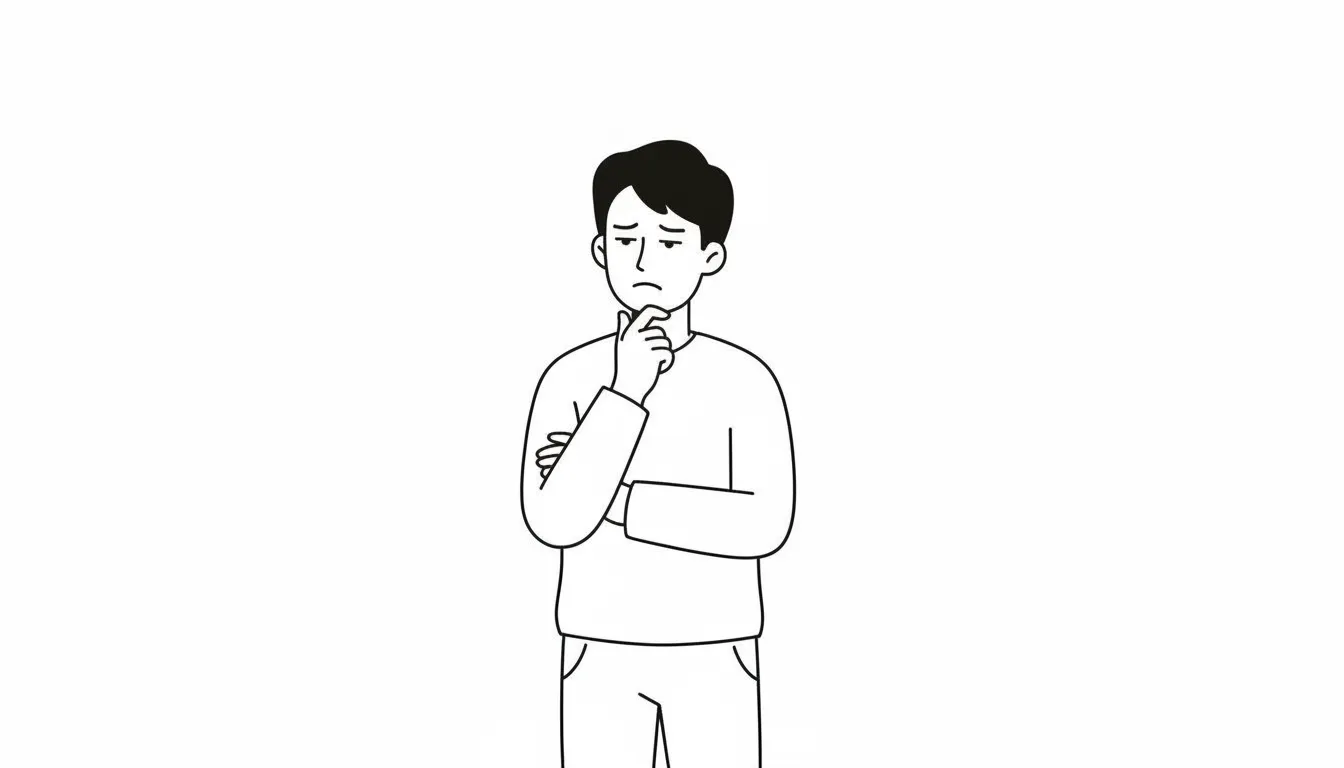
The time has come. You want to certify your English, but you’re plagued by that eternal doubt: Cambridge or EOI? You’re not the first and you won’t be the last. It’s like choosing between a Ferrari and a SEAT: both will get you there, but not to the same place or with the same style.
Here, we’re not going to tell you which one is «better» (that answer doesn’t exist), but which one is better for you. Because while Cambridge opens doors for you from Sydney to Toronto, the EOI might be your best ally if your professional world revolves around Spain. So, let’s dissect both exams so you can make your decision based on data, not myths.
Introduction: Two Options, Two Different Worlds
Imagine English certificates are like passports. Cambridge is the international passport that lets you travel to almost any country. The EOI is the Spanish ID card: essential here, but of limited use outside our borders.
In 2026, with the certification landscape more diverse than ever, understanding these differences is crucial. It’s not just about passing an exam; it’s about investing your time and money in the certification you actually need.
What are Cambridge and EOI, Really?
Cambridge English: The Global Certification
Cambridge English is like the Harvard of English certificates. Managed by the University of Cambridge, it’s the gold standard worldwide. Its exams (KET, PET, FCE, CAE, CPE) are recognised by over 25,000 institutions in 130 countries.
The best thing about Cambridge: it doesn’t expire. Once you have it, it’s yours forever. That said, some universities or companies might ask for it to be «recent» (from the last 2-3 years).
EOI: The Official Spanish Option
The Official Language Schools (Escuelas Oficiales de Idiomas) are the «made in Spain» option. They depend on the Ministry of Education and are the only non-university state official certification. They are ideal for civil service exams, public sector jobs, and any official procedure within Spain.
Oh, and a key detail: the EOI has the famous linguistic mediation, which we’ll talk about later, while Cambridge has the Use of English (usually hated, although I love it…).
Quick Comparison Table: Key Differences
| Aspect | Cambridge | EOI |
|---|---|---|
| Recognition | International (130 countries) | Spain only |
| Official Validity | Indefinite | Indefinite in Spain |
| Exam Format | Paper or digital* | Paper |
| Most Feared Part | Use of English | Speaking & Mediation |
| Approx. Price B2 | €200-€230 | €60-€95 |
| Results Time | 2-6 weeks | 2-4 weeks |
*At an authorised exam centre, not from home 😅
International Recognition: Where is Each Certificate Valid?
Cambridge: Open Doors in 130 Countries
If you dream of studying at Oxford, working for a multinational, or emigrating to Canada, Cambridge is your option. It’s accepted by:
- 99% of the world’s top 100 universities
- Governments for visas (UK, Australia, Canada)
- Companies like Microsoft, Adidas, HSBC
EOI: Validity Limited to Spain
The EOI is perfect if your goal is to work in the public administration, take civil service exams, or validate your English for Spanish companies. But beware: outside Spain you’ll need an apostille and sworn translation, and even then many institutions won’t recognise it.
The Big Difference: The EOI’s Linguistic Mediation
This is the most innovative and distinctive element of the EOI. Linguistic mediation assesses your ability to:
- Written Mediation: Summarise texts, explain technical information to a non-expert
- Oral Mediation: Interpret conversations, help a foreigner understand bureaucratic procedures
It’s a super practical skill that mimics real-life situations where you act as a linguistic «bridge». Cambridge doesn’t assess anything similar.
Exam Structure: How are you assessed?
Cambridge: The Traditional 4-5 Parts
Reading, Writing, Listening, Speaking… and from B2 level onwards, the famous Use of English. This last part is unique to Cambridge: open cloze, word transformation and key word transformation exercises that push your grammatical knowledge to the limit.
Certain aspects of Use of English are, in part, also incorporated into some EOI exams, but not as an independent section nor consistently across autonomous communities.
EOI: The Comprehensive Assessment of 5 Skills
The EOI goes further: Reading, Listening, Writing, Speaking and Linguistic Mediation. Each part is worth 20% and here’s the important bit: you must pass them all. If you fail one, you fail the entire exam.
Which is More Difficult? Analysis of Each Part
Cambridge’s Use of English: The Grammatical Challenge
This section is legendary. It assesses advanced grammar, complex vocabulary, and structures you don’t always use day-to-day. If grammar isn’t your strong point, Cambridge might be more difficult.
EOI’s Mediation and Speaking: The Critical Points
In the EOI, the Speaking can be brutal: a 3-4 minute monologue without visual aids, with examiners generally very demanding on pronunciation. And mediation requires synthesis and explanation skills that many students have never practised.
Prices and Real Cost: Beyond the First Impression
The EOI is cheaper at first glance (€60-€95 exam only vs €200-€230 for Cambridge). But also consider this:
- If you fail the EOI, you have to pay again for the next session, no question. In Cambridge, you can compensate between parts.
- The validity of Cambridge is, in general, much greater than that of EOI exams, so the ROI (return on investment) can be much higher than that of the EOI.
Certificate Validity: Do They Expire or Not?
Technically, neither expires. But the reality is more nuanced:
- Cambridge: Valid forever, but universities/companies may ask for a recent certificate (2-3 years old).
- EOI: Valid indefinitely in Spain, but not useful outside.
Equivalence Table: Cambridge-EOI
| CEFR Level | Cambridge | EOI |
|---|---|---|
| A2 | A2 Key (KET) | Basic Level |
| B1 | B1 Preliminary (PET) | Intermediate Level |
| B2 | B2 First (FCE) | Advanced Level |
| C1 | C1 Advanced (CAE) | C1 |
| C2 | C2 Proficiency (CPE) | C2* |
*Not all EOIs offer C2, especially for external candidates.
Who is Each Option For? A Practical Guide
Choose Cambridge if…
- You plan to study or work outside Spain
- Your company is multinational
- You need a visa for the UK, Australia or Canada
- You prefer a digital exam and faster results
- You want maximum international recognition
Choose EOI if…
- You are going to take civil service exams or work in public administration
- Your professional sphere is exclusively Spain
- You’re looking for the most economical option (as an official student)
- You value linguistic mediation as a practical skill
- You prefer assessment less focused on pure grammar
Can You Combine Both Certifications?
Of course you can! In fact, it’s a smart strategy:
- Option 1: Start with the EOI to develop fluency and then certify with Cambridge for international prospects.
- Option 2: Have an EOI certificate for civil service exams and a Cambridge one for your international CV.
Something else to consider about the EOI is that, if you meet the requirements, as it’s a Spanish public service, you can benefit from its weekly classes annually (course by course) at a ridiculously low price compared to what you’d pay for classes at a private English academy.
Take Our Test: Which Exam is For You: Cambridge or EOI?
Conclusion: Beyond the Myth of «Which is Better»
There is no «better» exam, there is the exam that’s «better for you». Cambridge is your passport to the world; the EOI is your linguistic ID card in Spain.
The final decision depends on three key factors:
- Your geographical goal: Spain or international?
- Your budget and time: One-off investment or economical option?
- Your strengths: Advanced grammar or communicative skills?
Whatever you choose, remember: the certificate is the destination, but the real value is in the English you learn along the way.
Still got questions? Leave comment below and I’ll get back to you as soon as possible.
See you soon.
Until then, don’t forget to keep smiling!